ELEPHANT GARLIC
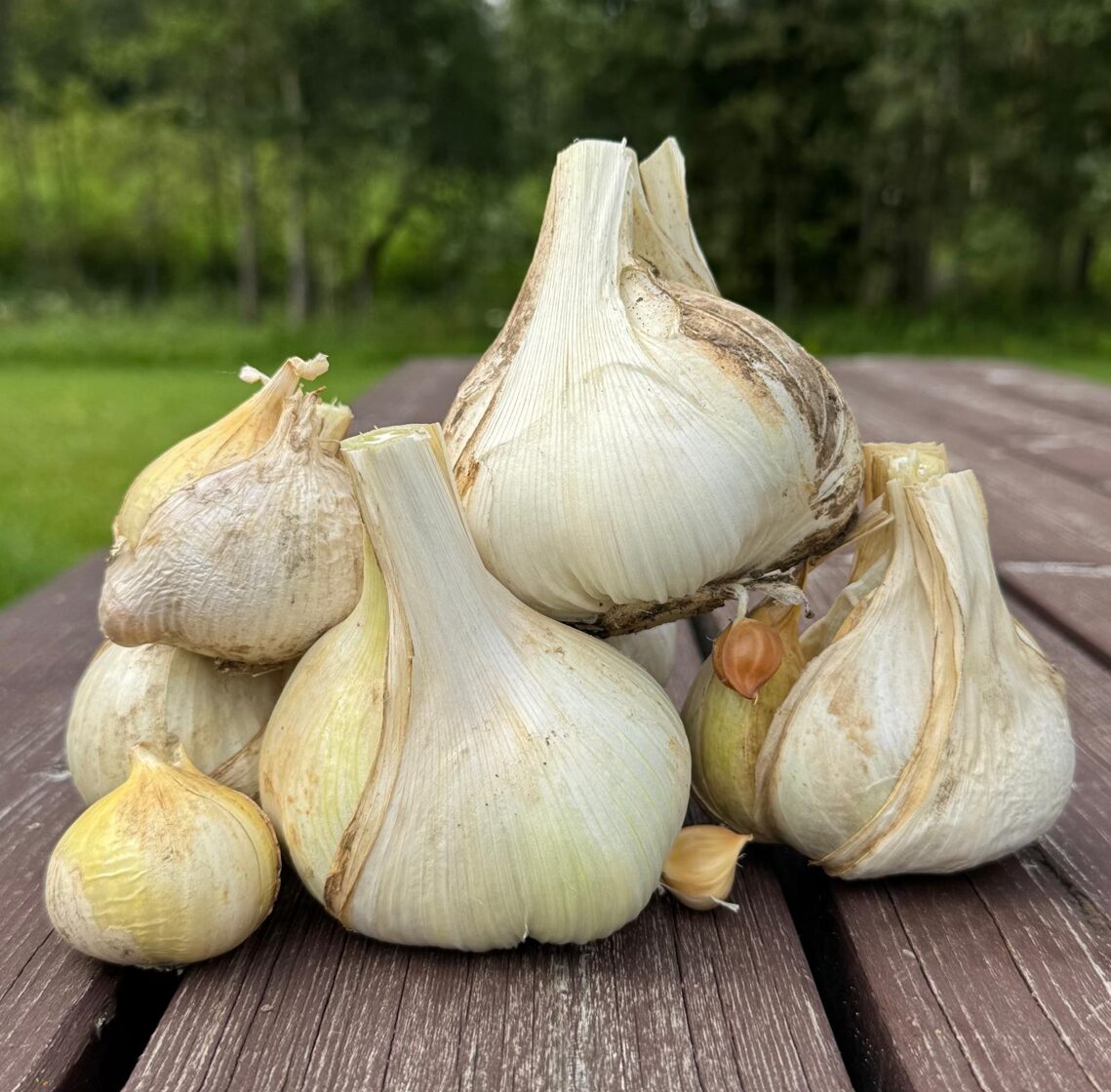
Elephant Garlic are impressively large, mild-flavored garlics that stand out with their huge bulbs and milder aroma compared to traditional garlic. Despite the name, botanically they are closer to leeks, but retain the classic garlic aroma — lighter, sweeter, and pleasant.
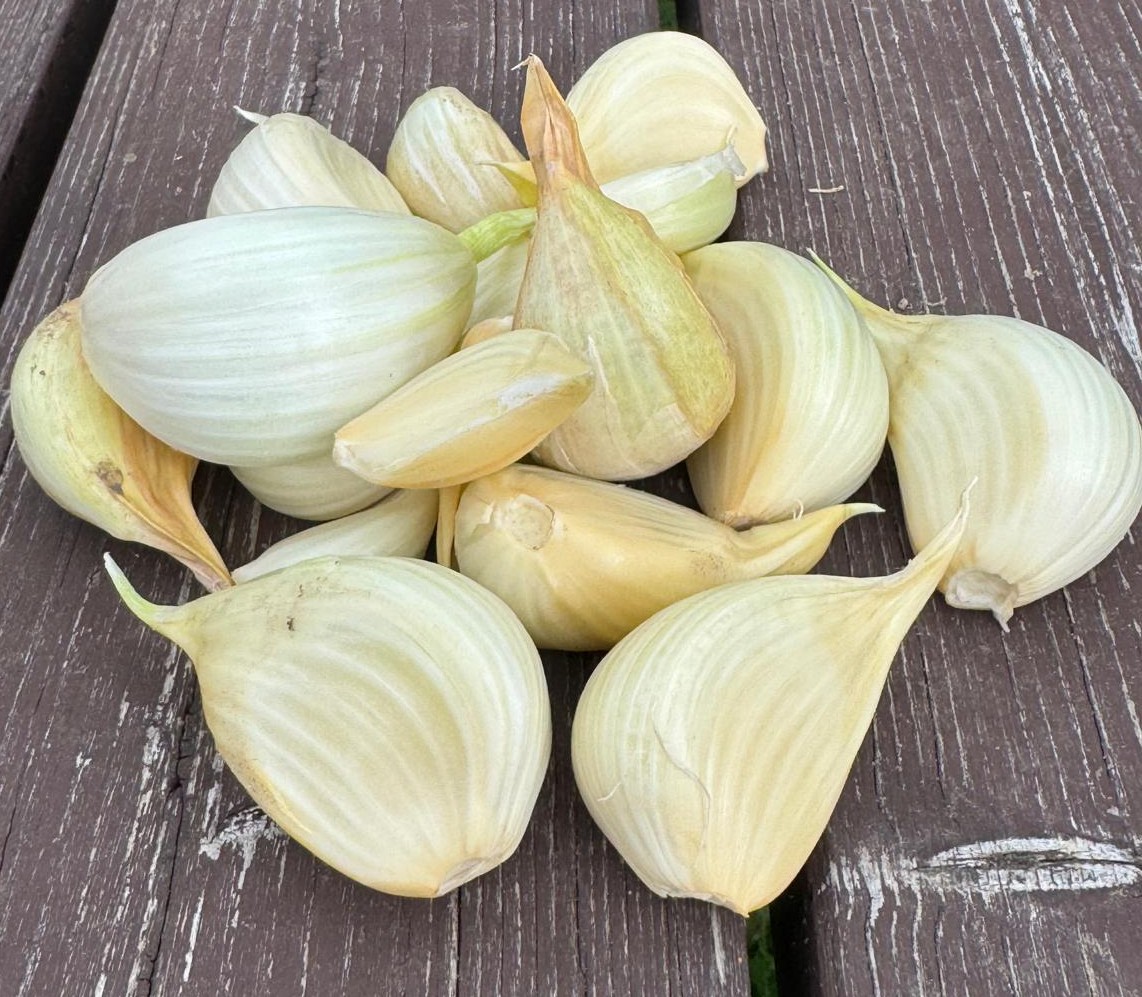
Elephant garlic bulbs reach a very large size, and each clove is much bigger than standard garlic cloves. They are ideal for grilling, roasting, fresh use, pickling, and a healthy diet. This variety is very productive, hardy, and also suitable for beginners — it grows well in various climatic conditions and is easy to care for.
A brief history of elephant garlic
Elephant garlic originates from the Mediterranean region, where it was cultivated in ancient Greece and Rome as a mild-flavored vegetable and medicinal plant. In the Middle Ages, it was mainly grown in monastery gardens, but gained wider recognition only later — spreading across Europe and later also in America.
Today, elephant garlic is especially popular in the USA and Europe, where chefs and gardeners appreciate its mild flavor, huge size, and ease of cultivation.
DESCRIPTION
Type: Mild-flavored garlic variety (Allium ampeloprasum)
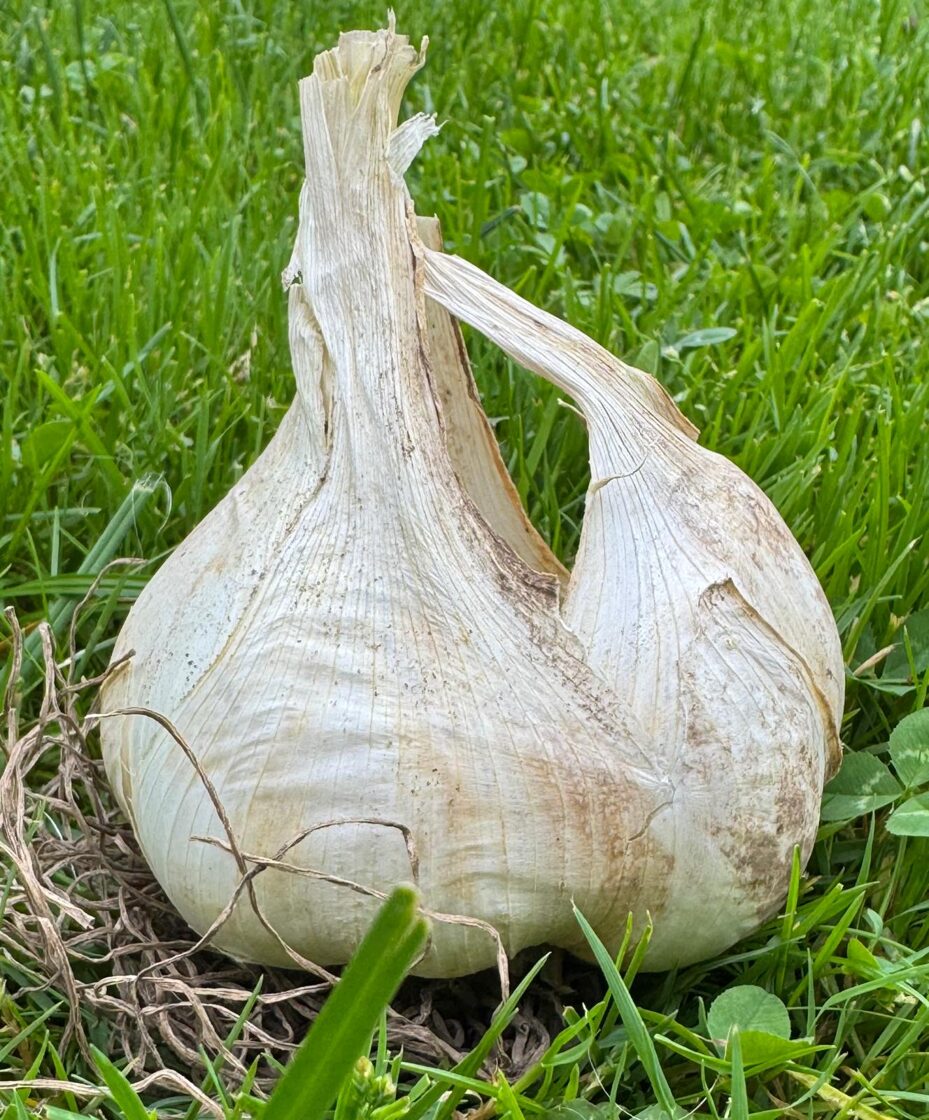
Bulb size: Very large — 200–500 g
Number of cloves: 4–6 very large cloves
Skin: White to creamy, often with a light yellowish tint
Clove color: Light, dense, juicy
Flavor: Mild, slightly sweet, less pungent than regular garlic
Harvest period: Mid-late — harvested in early July–August
Storage: Excellent — 6 months or more
Planting time: Autumn (October–November) or early spring
Planting depth: 6–10 cm
Spacing between plants: 20–30 cm (cloves are very large)
Row spacing: 40–50 cm
Propagation: by cloves or bulbils. The aerial seed is infertile, empty.
Soil requirements:
-
Fertile, well-drained soil
-
pH: 6.5–7.5
-
Full sun
Hardiness:
-
Winters well
-
Resistant to most fungal diseases
-
Suitable for growing even in cooler zones
Special advantages:
-
Huge size and large cloves
-
Mild, culinary versatile flavor
-
Long storage
-
Suitable for beginners and commercial cultivation