Winter garlic "Moroccan"
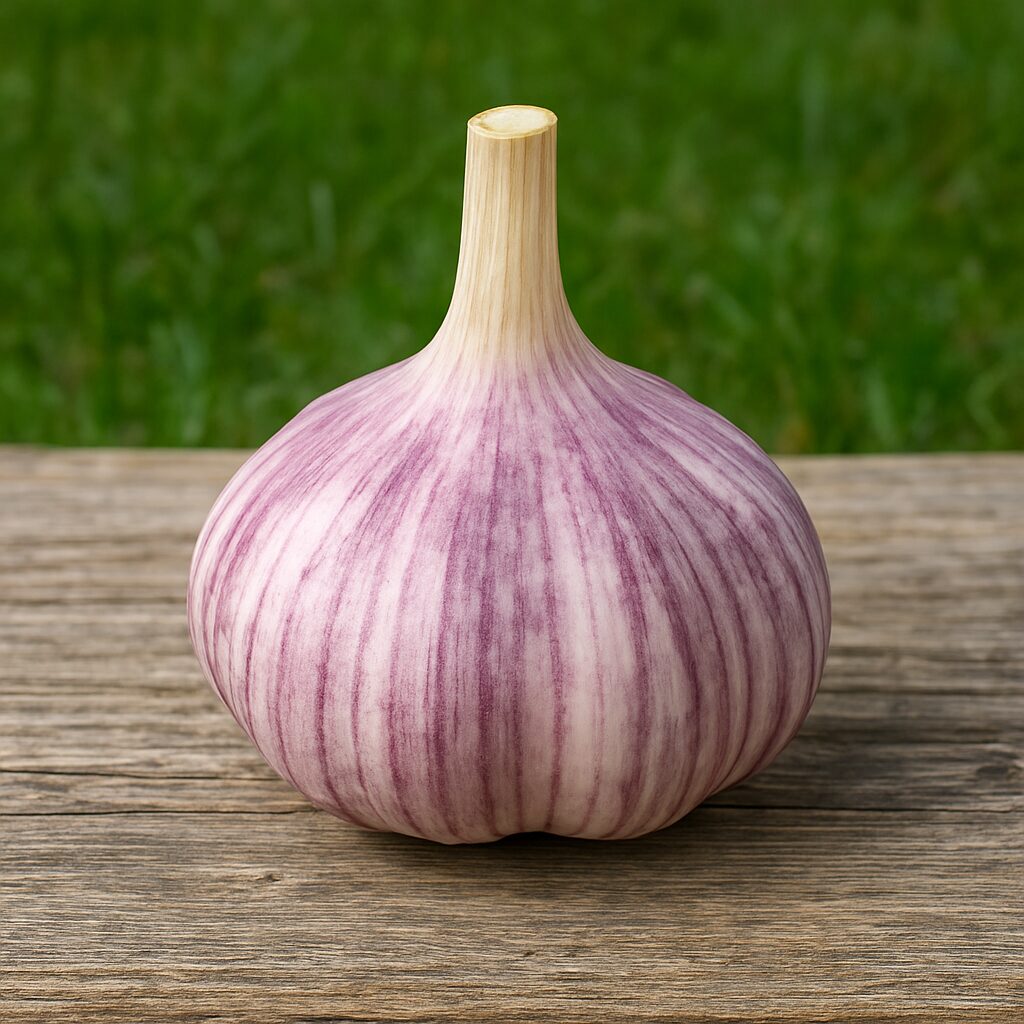 Allium sativum var sativum ssp silverskin subvar creole
Moroccan — an aromatic, intense garlic with a strong flavor and rich garlicky aroma. Ideal for both home canning and professional culinary use. Noted for its winter hardiness and long storage life — a true favorite in traditional kitchens.
History
Moroccan is an ancient North African garlic variety traditionally grown in Morocco, especially in the Atlas Mountains and Atlantic coastal regions. Garlic cultivation in these areas has been ongoing for over a thousand years, with local farmers selecting planting specimens over centuries for better drought resistance, early yield, and intense flavor.
The Moroccan variety was historically grown mainly for the local market, where it was highly valued for its strong, spicy aroma as well as its ability to produce good yields in hot and dry climates. In the late 20th and early 21st centuries, it began to be actively imported into Europe and America, where it became popular as an exotic, heat-tolerant, and distinctly purple-cloved variety.
Today, Moroccan is considered one of the most typical North African hardneck garlic representatives, chosen by both professional growers and gourmets.
Description
-
Name: Moroccan
-
Type: hardneck
-
Bulb size: medium (depends on soil and growing conditions).
-
Number of cloves per bulb: 6–8 larger
-
Skin/color: outer skin light purple / purple-striped
-
Flavor: intense, spicy, aromatic; suitable for grilling, marinades, preserves, and long thermal processing recipes where a strong garlic presence is needed.
-
Hardiness / climatic adaptation: adapts well to temperate and cold conditions; good winter hardiness.
-
Storage duration: 4–6 months with proper drying and storage (dry, cool, ventilated). Can be longer if stored optimally.
-
Origin: traditional Mediterranean/African regional line.
-
Suitability: for amateur gardens, households, and small commercial production.
Cultivation:
Planting time: in autumn (September–October) in cold regions; alternatively in early spring if autumn planting is not possible.
Planting depth: 3–5 cm
Soil: well-drained, soil pH 6.0–7.5; enriched with organic matter. Dislikes standing water.
Fertilization: before planting, organic compost or manure; during growth, additional N (nitrogen) in spring, then balanced NPK. Excessive N may reduce bulb formation.
Watering: moderate — avoid excess moisture during ripening (drying period).
Harvesting: usually at the end of July — beginning of August (depending on planting time and climate); when 50–70% of the leaves start to yellow.
Average yield: 2–4 kg/10 m² under amateur conditions, can be significantly higher in commercial intensive cultivation depending on care.