
Winter garlic "Bavarian Purple"
Allium sativum var ophioscorodon subvar rocambole
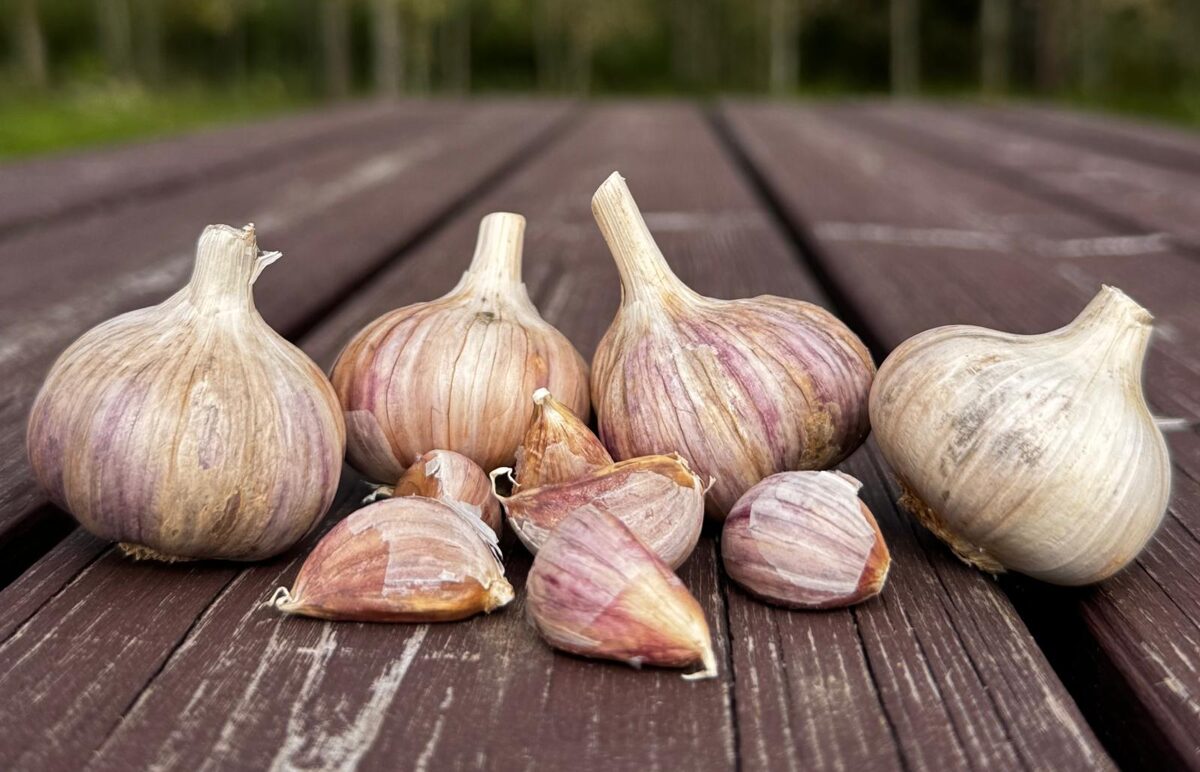
Bavarian Purple is a hardneck garlic variety with a distinctly purple skin color and large, well-formed cloves. It belongs to the Purple Stripe type or a related group (in some catalogs – Marbled Purple Stripe). This variety is popular among amateur and professional gardeners because:
-
it has a very strong aroma and sharp taste,
-
large clove sizes, usually 5–8 cloves per head,
-
high winter hardiness,
-
excellent taste when cooked (especially when baked).
The variety's name indicates its origin – Bavaria (Germany), where this type of hardneck garlic has been cultivated for centuries.
History
Bavarian Purple traces its roots to southeastern Germany – Bavaria, where hardneck and “purple stripe” type garlic were grown as traditional cold-resistant crops.
Such garlic was known in Europe as early as the Middle Ages, especially in Alpine regions where winters were too cold for softneck garlic.
-
-
In the late 19th and early 20th centuries, Bavarian garlic type populations spread to other parts of Europe.
-
-
-
In the second half of the 20th century, agronomists in the USA and Canada selected and stabilized “Bavarian Purple” as a separate variety, based on European gene pools.
-
-
Today it is one of the best-known purple-skinned hardneck varieties, especially sought after by gardeners and gastronomes.
Description
Botanical type
-
Allium sativum var. ophioscorodon (hardneck).
-
Forms a flower stalk.
Heads and cloves
-
Head weight: 45–90 g (depending on growing conditions).
-
Color: white skin with distinct purple stripes and spots.
-
Shape: slightly flat or round, symmetrical.
-
Number of cloves: 5–8 large cloves, easy to peel.
-
Clove color: light creamy, with a slight pinkish hue.
Taste and aroma
-
Very sharp, rich, persistent aroma.
-
When baked, the taste becomes sweet and deep.
-
Very popular in restaurants and amateur gastronomy.
Cultivation and growing requirements
-
Very suitable for cold and temperate climates (winter hardy).
-
Plant in late autumn, harvest in mid-July.
-
Requires moderately fertile, well-drained soil.
-
Vegetation period: ~240 days.
Disease and pest resistance
-
Good resistance to gray rot and fungal infections.
-
Moderate risk of nematodes if crop rotation is not observed.
Storage
-
Bavarian Purple keeps for 5–6 months if stored in a cool, dry place.