
Winter garlic variety "BELARUS"
Allium sativum var ophioscorodon subvar purple stripe
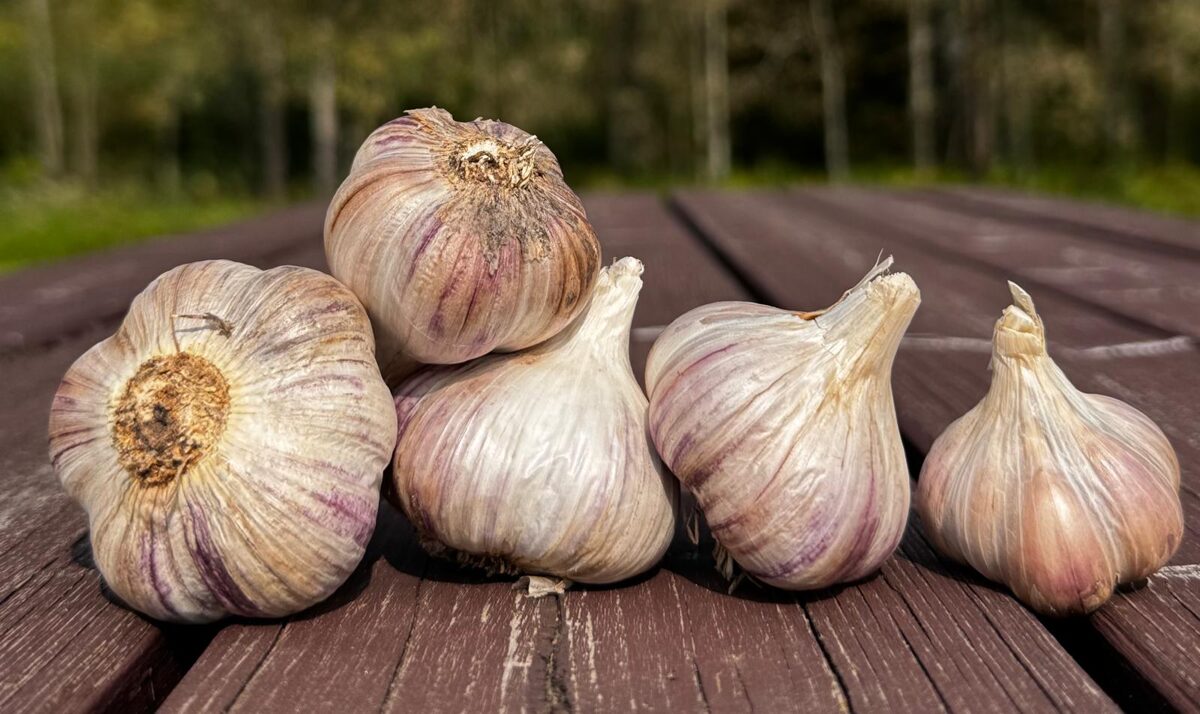
Belarus is a hardy hardneck garlic variety, bred in Belarus, where the climate requires especially resilient, productive, and disease-resistant varieties. It is one of the most popular varieties developed by Belarusian agronomists, widely grown also in Lithuania, Latvia, Ukraine, and Poland.
The variety is characterized by:
-
large, dense bulbs
-
6–8 massive cloves
-
white skin with a slight purple hue
-
distinctly sharp, robust aroma
-
high winter hardiness and good yield
Suitable for commercial and home cultivation.
History
Belarus variety was created at Belarusian horticultural institutes in the late 20th – early 21st century, based on:
-
local folk selection lines
-
Eastern European hardneck garlic gene pool
-
the aim to create a variety with maximum yield, winter hardiness, and market quality
It quickly became popular, proving its:
-
adaptation to harsh continental climate,
-
stable and consistent yield,
-
flavor intensity, which is sought after in Baltic and Eastern European cuisine.
Today, it is grown as a regionally significant variety, also used as a breeding base for new lines.
Description
Botanical type
-
Allium sativum var. ophioscorodon
-
Hardneck variety
-
Forms a sturdy, straight flower stalk
Bulbs
-
Average weight: 60–90 g
-
Shape: from round to slightly flattened round
-
Color: white, with a light purple or pinkish tinge between the skins
-
Density: excellent — bulbs do not crumble, well suited for trade
Cloves
-
Number: 6–8 large, symmetrically arranged
-
Clove skin: creamy with purple streaks
-
Peeling: easy
Flavor
-
very pungent, strong, persistent aroma
-
When heated, becomes sweeter, flavor profile similar to Eastern European hardneck varieties
Agronomy
-
Plant late October – early November
-
Harvest: mid-July – August
-
Grows best in moderate, nutrient-rich, loose soils
-
Vegetation cycle: 230–250 days
-
Winter hardiness: very high, suitable for -30°C and variable snow cover
Disease resistance
-
Resistant to:
-
white rot infections
-
bacterial rots
-
fungal diseases
-
-
Moderate resistance to nematodes
Storage
-
4–6 months, sometimes longer at the top
-
When stored in cool rooms at +1…+4°C, retains quality until spring