GALICJAN- WINTER GARLIC
Allium sativum var ophioscorodon
Some garlic varieties have more than just beautiful looks and distinctive flavour — they also have fascinating stories that reach far beyond our gardens. Galicjan is one of those varieties that catches the eye with its purple hues, large cloves and reputation as a hardy, winter-hardy hardneck garlic.
This variety is associated with the historical region of Galicia, located in what is now southern Poland. However, as is often the case in the world of garlic, behind a variety’s name lie not only its growing characteristics but also questions about its origins and connections to ancient local traditions.
Beautiful, Hardy and Distinctive
Galicjan is a hardneck garlic variety. Hardneck garlics are characterised by a firm flower stalk that often curls as it grows, as well as relatively large cloves that are easy to separate.
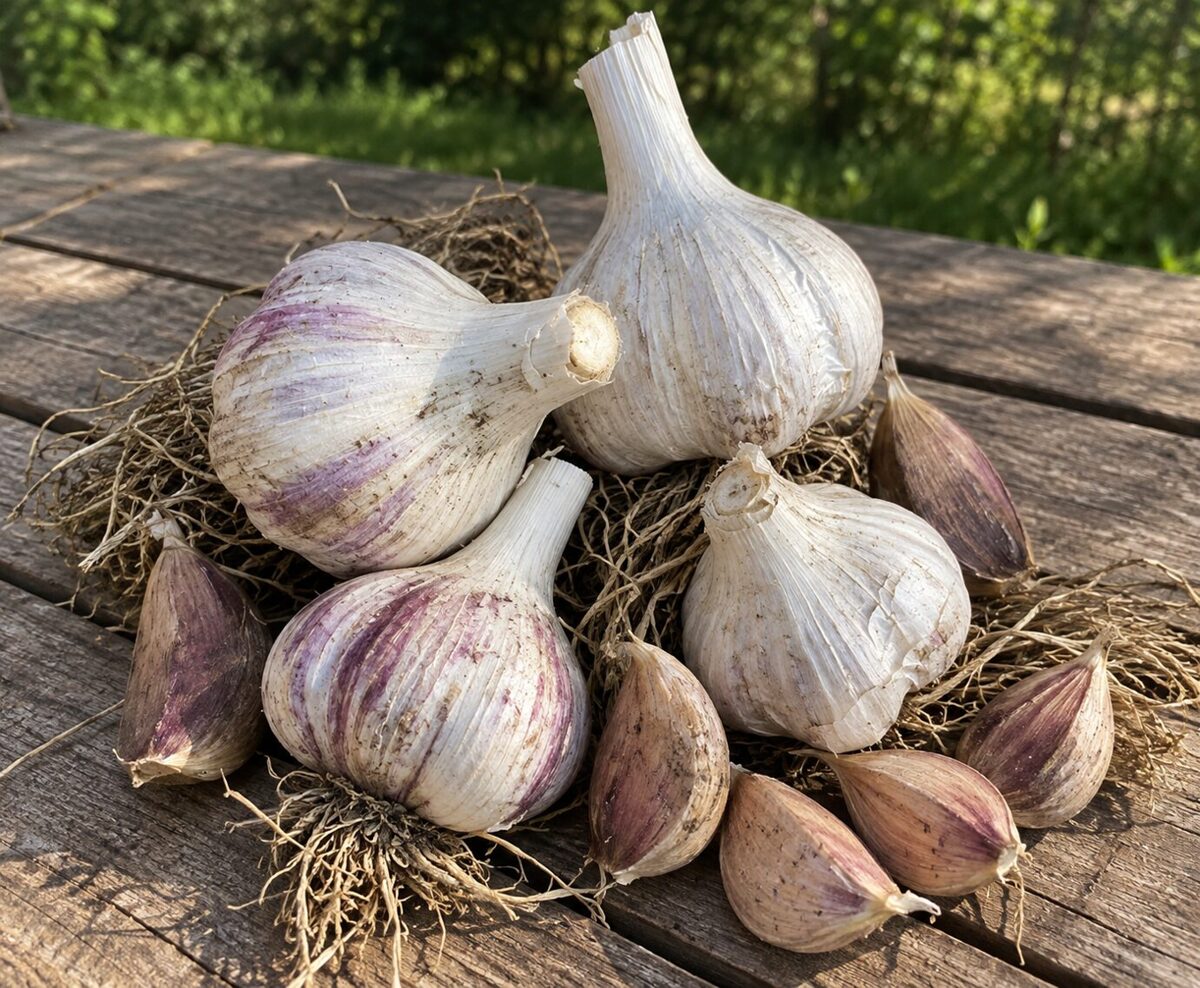
Galicjan bulbs stand out with their beautiful purple hues. The colour of the outer skin gives this garlic a distinctive appearance — it is one of those varieties you want to take a closer look at before placing it in the planting box or on the kitchen shelf.
Variety descriptions highlight its large, easy-to-peel cloves and rich aroma. These qualities are particularly valuable both to gardeners growing garlic for their own use and to collectors looking for interesting varieties with distinctive appearances and characteristics.
Winter Hardiness — An Important Quality in Latvia, Too
Galicjan is described as a hardy, winter-hardy garlic variety. This is particularly important in my garlic collection because, in Latvia’s climate, garlic must withstand not only cold temperatures but also changeable weather, winter thaws and fluctuations in moisture.
However, a variety’s hardiness must always be assessed under actual growing conditions. Soil type, planting time, drainage and how well the plants establish their roots before winter all play an important role. Even a very winter-hardy garlic variety will struggle in persistently waterlogged soil.
That is why I am always interested not only in what catalogues say about a variety but also in how it performs in our own garden. Does it survive the winter well? How does it develop in spring? How large do the bulbs grow in our soil? These observations help me understand which varieties are truly worth growing in Latvia.
The History of Galicjan — A Journey to Galicia
The variety’s name leads us to Galicia, a historical region that includes parts of present-day southern Poland. Garlic cultivation has deep roots in this area.
Historical sources mention garlic in the Kraków region as early as the 17th century. In a work published in 1613, the Polish botanist and physician Szymon Syreński described garlic as a familiar and widely used plant. This indicates that garlic had an important place in everyday life in the region several centuries ago.
The name Galicia also survives in the traditional product name Czosnek galicyjski, meaning Galician garlic. This product is associated with a specific region of Poland and its garlic-growing traditions. However, it is important to remember that the Galicjan variety sold today cannot necessarily be proven to be genetically identical to the ancient garlic lines grown in this region.
In my opinion, this uncertainty is precisely what makes garlic collecting so fascinating. Sometimes a variety’s name provides a clue that opens the door to historical research, even if it does not give us all the answers.
Galicjan is another interesting addition to my collection — a variety that combines an attractive appearance, promising winter hardiness and a fascinating historical story. And, as with every new garlic variety, the most interesting part still lies ahead: discovering how it performs in our soil and what the next harvest will reveal.
* The original planting material for this variety was purchased with an EU Plant Passport, ensuring traceability of its origin and compliance with plant health requirements.